Best Edinburgh Neighbourhoods for Young Professionals
Where to rent in Edinburgh: neighbourhood rents, council tax, transport and tenancy rules, with sources checked October 2026.
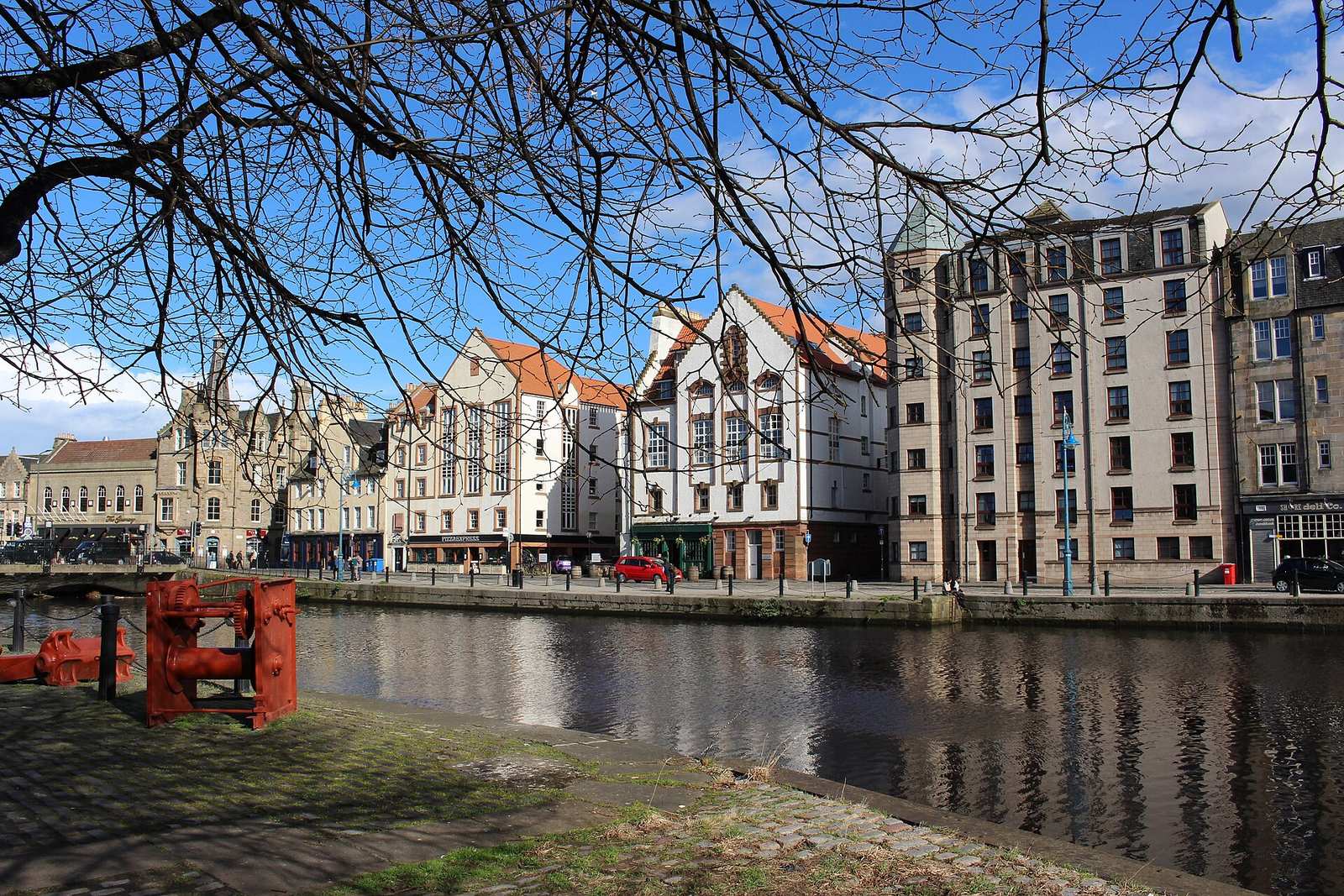
Photo: Graeme Yuill / Wikimedia Commons, CC BY-SA 2.0
The best Edinburgh neighbourhoods for young professionals are Leith for waterfront dining and direct tram connections, Fountainbridge for modern build-to-rent flats next to the financial district, and the Southside around Bruntsfield and Marchmont for Victorian tenements bordering the Meadows. Stockbridge suits those willing to pay a premium for village-style independent shops and Sunday market stalls within a 20-minute walk of Princes Street. Choosing the right postcode depends on whether you prioritise a short walk to an office in the Exchange district, access to late-night bars, or quieter period streets for hybrid working.
Weighing Up Rent Council Tax and Commuting in 2026
Finding a flat in the Scottish capital requires balancing monthly outgoings against daily travel times. According to the Citylets Q2 2026 Edinburgh rental report, the average rent across all property sizes in Edinburgh reached £1,596 per calendar month, up 1.0 per cent year on year (checked October 2026). Across the city, one-bedroom flats average £1,095 per month, two-bedroom flats average £1,449 per month, and three-bedroom flats average £2,121 per month. As Harry Crombie of Stand Property notes in the Q2 2026 report: "The rapid rental growth experienced over recent years has now stabilised, reflecting a more sustainable market rather than weakening demand."
Pricing and speed of letting vary significantly once you break the city down by postcode. Data from the Citylets Q2 2026 postcode report shows that central EH3 (covering Fountainbridge, the West End and Stockbridge) commands an average of £1,306 per month for a one-bedroom flat and £1,716 for a two-bedroom flat, taking an average of 26 days to let (checked October 2026). By contrast, EH6 (Leith) averages £1,034 for a one-bedroom flat (letting in 21 days) and £1,340 for a two-bedroom flat.
Beyond rent, your second largest fixed accommodation cost is Council Tax, which in Scotland is billed alongside unmetered water and waste water charges from Scottish Water. Following a 4 per cent council tax rise and an 8.67 per cent water charge increase, the City of Edinburgh Council 2026/27 band charges set the baseline Band D total at £2,278.37 per year, comprising £1,626.05 in Council Tax, £301.95 for water and £350.37 for sewerage (checked October 2026). Single occupants qualify for a discount on these annual charges.
Commuting across the city is straightforward because the commercial core is compact. Most major employers sit in two main clusters: the traditional financial and legal streets around Charlotte Square, St Andrew Square and George Street, and the modern Exchange district stretching from Lothian Road to Haymarket. If you do not walk or cycle, public transport is dense. From 22 February 2026, the Lothian Buses 2026 fare tariff set an adult single bus fare at £2.40, with contactless TapTapCap daily capping at £5.70 and weekly capping at £26.50 across city buses (checked October 2026). Unlike cities where bus services stop at midnight, the Lothian Buses NightBus network runs dedicated late routes between midnight and 4.30am across Edinburgh and the Lothians for a £3.50 single fare in zones A and B (checked October 2026).
Leith and the Shore for Waterfront Living and Dining
Leith has shifted over the past decade from a former industrial port into the primary hub for twenty- and thirty-somethings renting in Edinburgh. Operating with its own distinct identity down in the EH6 postcode (and adjoining EH7 along the upper walk), it combines traditional sandstone tenements along Leith Walk and Easter Road with warehouse conversions around the Shore and modern apartment blocks near the docks. Neighbouring EH7 averages £1,061 for a one-bedroom flat (checked October 2026).
The biggest practical change for commuters is the completed tram line to Newhaven. According to the Edinburgh Trams official timetables, trams run from every seven minutes throughout the daytime seven days a week (and every ten minutes in the early morning and evening), taking 11 minutes from Foot of the Walk and 22 to 23 minutes from Newhaven to St Andrew Square (checked October 2026). As detailed on the Edinburgh Trams 2026 fare guide, an adult City Zone single tram ticket costs £2.40, with a weekly tram-only pass at £21.00 (checked October 2026).
For food and socialising, Leith punches well above its weight. As noted on the Edinburgh Trams Shore stop guide, the historic harbour along the final section of the Water of Leith is home to Michelin-starred restaurants from Martin Wishart and Tom Kitchin alongside independent cafes, pubs and the newly reinstated nineteenth-century Robert Burns statue on Bernard Street. Further west along the waterfront, The Pitt street food venue relocated from Pitt Street in Leith to a larger permanent promenade site at 20 West Shore Road in Granton (EH5 1QD), opening Friday to Sunday (checked October 2026). Closer to the docks in Leith proper, the regenerated Ocean Terminal waterfront centre at Ocean Drive (EH6 6JJ) provides a cinema, bowling and a supermarket overlooking the water.
Fountainbridge and West End for Build to Rent Convenience
For professionals working in banking, technology or corporate law around Morrison Street, Haymarket or the Exchange, Fountainbridge (straddling EH3 and EH11) offers one of the shortest door-to-desk journeys in the city. Positioned west of Tollcross and south of Haymarket Station, the neighbourhood sits along the eastern terminus of the Union Canal.
Where other parts of Edinburgh are dominated by private landlords letting out individual nineteenth-century flats, Fountainbridge is the centre of the city's modern build-to-rent sector. Flagship developments such as Moda Living at The McEwan offer studio, one-, two- and three-bedroom apartments starting from £1,685 per month (checked October 2026). Residents at The McEwan receive access to a 24-hour gym, co-working rooms, roof terraces and a 24-hour concierge.
Away from the apartment blocks, the canal basin serves as a focal point for waterside cafes and towpaths that lead west towards Slateford. Just west of Fountainbridge at 130 Dundee Street (EH11 1AF), the Fountain Park leisure complex houses a Cineworld with an IMAX screen, a gym, bowling, climbing walls and casual dining (checked October 2026). Walking to Haymarket Station takes about 10 minutes, giving direct rail and tram connections to Edinburgh Park and Glasgow.
Bruntsfield Marchmont and Southside for Green Space
Stretching south from the edge of the Old Town, the Southside neighbourhoods of Marchmont, Newington and Sciennes (EH9) alongside Bruntsfield and Morningside (EH10) form the classic residential belt for postgraduates, hospital staff, and young professionals who prefer leafy streets over late-night bars. According to Citylets Q2 2026 data, one-bedroom flats average £1,172 per month in EH9 and £1,182 in EH10 (where one-bedroom homes let in just 19 days), while two-bedroom flats average £1,555 in EH9 (letting in 20 days) and £1,538 in EH10 (checked October 2026).
The housing stock here consists almost entirely of Victorian stone tenements featuring high ceilings, bay windows and shared rear gardens known locally as back greens. Dividing these streets from the city centre is the Meadows, a large public park that provides traffic-free walking and cycling paths directly into the Quartermile office development and the central university campus.
Bruntsfield Place acts as one of the strongest local high streets in the city, packed with independent delicatessens, grocers, coffee shops and neighbourhood bistros. Walking from Bruntsfield or Marchmont across the Meadows to Lothian Road or George Square takes 20 to 30 minutes. Lothian Buses day routes 5, 11, 15, 16 and 23 connect the southern corridors with the city centre. Because Marchmont sits close to the University of Edinburgh, certain stairwells have a high concentration of student flats; when viewing properties here, ask the letting agent about the mix of residents in the building if you want quiet weekday evenings.
Stockbridge and the New Town Edges for Village Character
North of Queen Street, the ground drops steeply into the valley of the Water of Leith, where the Georgian terraces of the New Town meet the former mill village of Stockbridge (splitting the northern edge of EH3 and southern EH4). In EH3, average rents sit at £1,306 per month for a one-bedroom flat and £1,716 for two bedrooms, while EH4 averages £1,210 for one bedroom and £1,455 for two bedrooms (checked October 2026).
Stockbridge High Street – running across Deanhaugh Street, Raeburn Place and St Stephen Street – is known for its charity and vintage shops, independent cheesemongers, cafes and traditional pubs. Every weekend, the Stockbridge Market on Saunders Street (EH3 6TQ) operates on Sundays all year round from 10am to 4pm, hosting independent traders selling paella, organic produce, artisan breads, cheese, charcuterie and crafts (checked October 2026). From the market, the walkway along the Water of Leith leads west towards Dean Village or northeast towards Inverleith.
Walking from Stockbridge up the hill into the New Town and George Street takes around 20 minutes. The primary trade-off in Stockbridge and the adjoining New Town streets is cost and nightlife: rents and Council Tax bands are among the highest in the capital, and local pubs are noticeably quieter after 11pm than those in Leith or the Old Town.
Old Town and Central Postcodes for Zero Commute
Living inside the historic core of the Old Town (EH1) or the Eastern New Town around Broughton and Hillside strips your daily commute down to a short walk. In EH1, a one-bedroom flat averages £1,228 per month and a two-bedroom flat averages £1,591, while neighbouring Broughton averages £1,049 for a one-bedroom flat and £1,441 for two bedrooms (checked October 2026).
The Old Town suits renters who want immediate access to Waverley Station, Holyrood and the live music venues around the Cowgate and Grassmarket. However, you need to factor in the seasonal shift that happens every summer. As confirmed by the Edinburgh Festival Fringe Society at 180 High Street (EH1 1QS), the Fringe runs for three weeks every August – with the 80th edition scheduled for 6 to 30 August 2027 – bringing hundreds of stages and heavy crowds to the Royal Mile and surrounding wynds (checked October 2026).
Car Ownership Low Emission Zone and Parking Rules
If you plan to bring a car to Edinburgh, where you rent will heavily affect your motoring costs. Since 1 June 2024, the City of Edinburgh Council Low Emission Zone (LEZ) has operated continuously, 24 hours a day, 365 days a year across the city centre boundary, enforced by automatic number plate recognition (ANPR) cameras that issue penalty charge notices to non-compliant vehicles (checked October 2026). That boundary encompasses the Old Town, New Town, Tollcross and parts of Fountainbridge.
On-street parking is also tightly controlled and priced by zone. According to the Edinburgh Council parking prices and times (updated from April 2025 and checked October 2026), pay-and-display parking in the core George Street, St Andrew Square and Charlotte Square streets costs £9.00 per hour (Monday to Saturday 8.30am to 6.30pm, and Sunday 12.30pm to 6.30pm). In Fountainbridge and Tollcross it is £6.80 per hour, and in peripheral zones covering Bruntsfield, Sciennes, Stockbridge and Dean it costs £4.60 per hour.
Understanding Scottish Rental Rules and Practical Steps
If you are relocating to Edinburgh from England, Wales or overseas, the legal framework for renting a flat is different from the English Assured Shorthold Tenancy model. As detailed in the FigurePath guide to Scottish Private Residential Tenancies, every private residential tenancy in Scotland since 1 December 2017 is open-ended with no fixed end date (checked October 2026). Tenants can leave at any time by giving at least 28 days' written notice (allowing two extra days for delivery by email or post), whereas landlords can only end a tenancy by serving a formal notice to leave using one of 18 statutory eviction grounds, which require 28 or 84 days' notice depending on the ground and length of occupancy.
Rent increases and deposits are also strictly regulated:
- According to Citizens Advice Scotland's rent increase rules, a landlord under a private residential tenancy can only increase your rent once every 12 months and must give at least three months' written notice on the official form; tenants have 21 days to refer an increase to Rent Service Scotland (checked October 2026).
- Landlords can ask for a deposit of no more than two months' rent and must protect it in one of three approved schemes, including SafeDeposits Scotland, which provides free alternative dispute resolution (checked October 2026).
- Every private landlord must be listed on the official Scottish Landlord Register, where tenants can search by property address or landlord name before paying a deposit (checked October 2026).
- Local solicitors and letting agencies advertise heavily on the ESPC property portal alongside Citylets, so set up instant alerts on both platforms when starting your search.
- If you are moving to Scotland from overseas for work, check the official GOV.UK work visa guidance before finalising your relocation timeline (checked October 2026).
This is an independent member's guide compiled by Edinburgh Society. We are not affiliated with the venues and institutions mentioned; opening arrangements and programmes change - always confirm details on the official websites before making plans.
← Back to Events