Day trips from Edinburgh - a member's guide
Where to go when you have a day and want it to count: real destinations within reach of Edinburgh.
Edinburgh serves as an excellent base for exploring central Scotland's diverse history and landscapes. Within a short distance, visitors can experience medieval chapels, iconic engineering feats, coastal towns, royal palaces, and historic battlefields. These day trips offer varied insights into Scotland's heritage and natural beauty.
Rosslyn Chapel
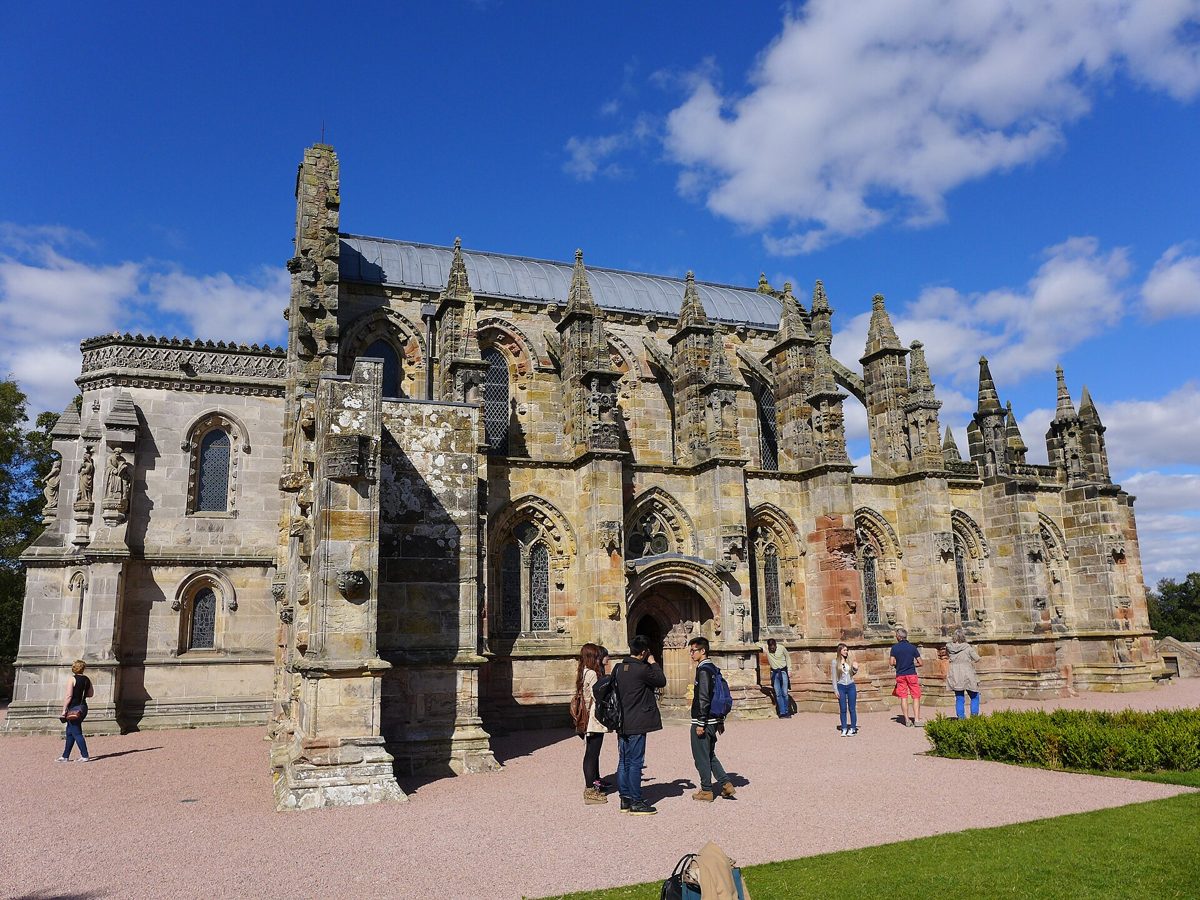
Rosslyn Chapel, located in the village of Roslin, is a remarkable example of late Gothic architecture. Founded in 1446 by Sir William St Clair, its true distinction lies in the extraordinary density and complexity of its stone carvings. These intricate details cover almost every surface, depicting biblical scenes, pagan symbols, and various enigmatic motifs. The chapel gained wider modern recognition after featuring prominently in Dan Brown's novel "The Da Vinci Code," which brought renewed attention to its alleged connections with the Knights Templar and various historical mysteries.
A day trip to Rosslyn Chapel is rewarding for several reasons. The sheer artistry of the stonework demands close inspection; visitors often spend hours deciphering the individual carvings and the broader narratives they present. Highlights include the 'Apprentice Pillar' with its twisted, ornate base and capital, and the 'Green Man' carvings, which appear in various forms throughout the chapel. The peaceful setting of Roslin village also offers a quiet contrast to the city, allowing for reflection on the chapel's long history and the stories woven into its fabric. The chapel's unique atmosphere, steeped in both religious devotion and speculative legend, provides a compelling experience for those interested in art, history, and folklore.
Rosslyn Chapel is situated a relatively short distance south of Edinburgh city centre. It is easily accessible by a direct public bus journey or a brief drive.
South Queensferry and the Forth Bridge
South Queensferry is a historic burgh on the Firth of Forth, best known for its unparalleled views of three iconic bridges: the Forth Bridge, the Forth Road Bridge, and the Queensferry Crossing. The original Forth Bridge, a cantilever railway bridge completed in 1890, is a UNESCO World Heritage site and a monumental achievement of Victorian engineering. Its distinctive red steel structure remains a globally recognized symbol of Scotland's industrial heritage.
Spending a day in South Queensferry offers a blend of historical appreciation and scenic beauty. The town itself is charming, with narrow cobbled streets, historic buildings, and independent shops. Visitors can walk along the waterfront, enjoying expansive views of the bridges and the Firth. Boat trips departing from the harbour provide a different perspective, often sailing under the bridges and offering views of Inchcolm Abbey on Inchcolm Island. The engineering prowess represented by the Forth Bridge, designed by Sir John Fowler and Benjamin Baker, is best appreciated up close, observing its vast scale and the intricate lattice work of its steel girders. The town's historical connection as a ferry crossing point, dating back to Queen Margaret's time, adds another layer of interest.
South Queensferry lies to the north-west of Edinburgh. It is readily accessible by a short train ride from Edinburgh Waverley station or via a frequent bus service.
North Berwick
North Berwick is a picturesque coastal town in East Lothian, renowned for its sandy beaches, golf courses, and the distinctive Bass Rock. This volcanic island, rising dramatically from the Firth of Forth, is home to the world's largest colony of northern gannets and is a designated Scottish Natural Heritage site. The town itself has a classic seaside charm, with a bustling high street and a relaxed atmosphere.
A day trip to North Berwick provides an invigorating escape to the coast. Activities include: Beach walks: Enjoy the town's two main beaches, West Bay and East Bay, offering views across the Firth of Forth. Wildlife observation: Visit the Scottish Seabird Centre, where live cameras offer close-up views of the gannets on Bass Rock and other local marine wildlife. Boat trips to Bass Rock are also available, weather permitting, for an even closer encounter with the birds. Town exploration: Wander through North Berwick's independent shops, art galleries, and cafes. The harbour area is particularly scenic. Views from North Berwick Law: For those seeking a more active pursuit, a walk up North Berwick Law, a conical hill behind the town, provides panoramic views of the coastline, the Firth, and inland towards Edinburgh.
North Berwick is located east of Edinburgh and is easily reached by a direct train journey, making it a convenient coastal excursion.
Stirling
Stirling, often referred to as the "Gateway to the Highlands," is a city steeped in Scottish history, acting as a former capital and the site of pivotal battles. Dominating the skyline is Stirling Castle, one of Scotland's most historically significant castles. Nearby, the National Wallace Monument commemorates Sir William Wallace, a key figure in the Wars of Scottish Independence. The city's strategic location made it a focal point for control over Scotland, leading to events like the Battle of Stirling Bridge in 1297 and the Battle of Bannockburn in 1314.
A day in Stirling offers a deep dive into Scotland's past. Stirling Castle, a grand royal residence and fortress, provides extensive opportunities to explore royal apartments, great halls, and military defences. Visitors can imagine the lives of Scottish monarchs, including Mary Queen of Scots, who was crowned there. The National Wallace Monument, perched atop Abbey Craig, offers not only exhibits detailing Wallace's life and the battle for independence but also breathtaking views across the Forth Valley and beyond. The Old Town of Stirling, with its historic buildings and atmosphere, complements the major attractions. The sheer concentration of significant historical sites makes Stirling a compelling destination for understanding Scotland's national story.
Stirling is situated to the west-north-west of Edinburgh and is well-connected by a direct train service, making the journey straightforward.
Linlithgow Palace
Linlithgow Palace, now a magnificent ruin, was once a principal residence of the Scottish monarchs in the 15th and 16th centuries. Set beside the tranquil Linlithgow Loch, it served as a convenient stopping point between Edinburgh Castle and Stirling Castle. It is perhaps most famous as the birthplace of Mary Queen of Scots in 1542. Despite its current state, the palace's substantial remains convey a strong sense of its former grandeur and the royal life once conducted within its walls.
Visiting Linlithgow Palace rewards a day with a chance to explore a significant piece of Scottish royal history in a peaceful setting. The palace's quadrangular design, with its central courtyard, allows for easy navigation through what were once royal apartments, a great hall, and a chapel. The detailed stonework and architectural features, even in ruin, speak to the craftsmanship of its builders. A walk around Linlithgow Loch offers different perspectives of the palace and the surrounding landscape, providing a pleasant natural complement to the historical exploration. The nearby St Michael's Parish Church, with its distinctive modern spire, also holds historical interest and connection to the palace. The combination of historical ruins and natural beauty makes for a contemplative and informative day out.
Linlithgow Palace is located to the west of Edinburgh. It is easily accessible via a direct train journey, with the palace a short walk from the station.
Frequently asked questions
Are these destinations accessible by public transport?
Yes, all the listed day trip destinations are readily accessible from Edinburgh using public transport. Trains are generally the quickest option for Stirling, North Berwick, and Linlithgow. For Rosslyn Chapel and South Queensferry, direct bus services provide convenient routes. While specific journey times vary, these locations are well within comfortable reach for a day excursion without the need for a car.
What should I consider for a comfortable day trip in Scotland?
Scottish weather can be unpredictable, even in summer. It is advisable to dress in layers and carry waterproof outerwear, regardless of the forecast. Comfortable walking shoes are essential, as many historical sites involve walking on uneven surfaces or exploring expansive grounds. Bringing water and some snacks is also a practical consideration, especially when exploring more rural or extensive sites.
Can I combine multiple destinations in one day?
While it might seem tempting to visit several places in a single day, it is generally recommended to focus on one primary destination to fully appreciate its offerings. Each of these locations- Rosslyn Chapel, the Forth Bridges, North Berwick, Stirling, and Linlithgow Palace- provides enough historical, cultural, or natural interest to occupy a full day. Attempting to combine them might lead to rushing and a less enriching experience.
This is an independent member's guide compiled by Edinburgh Society. We are not affiliated with the venues and institutions mentioned; opening arrangements and programmes change - always confirm details on the official websites before making plans.
← Back to Events